




















































What is B2B data freshness?
B2B data freshness means how current, verified, and usable your contact and company records are at the moment your sales team acts on them. Fresh data includes accurate emails, valid phone numbers, current job titles, active company records, and updated buying signals. It is not simply about how recently a database was built; it is about whether every individual record reflects reality right now, when your rep is about to send an email or pick up the phone.
Every sales leader has heard the pitch: “We have 500 million contacts.” It sounds impressive. The number has weight to it. But without B2B data freshness, that scale quickly loses value. When your SDRs start dialing those numbers only to hit voicemail after voicemail, or your emails bounce before anyone even reads the subject line, that impressive database starts to feel less like an asset and more like dead weight.
The uncomfortable truth in modern B2B sales is that database size is not a proxy for database value. A contact record that was accurate eighteen months ago may belong to someone who has changed companies twice since then. If a company acquires and migrates the domain, an email that passed a syntax check earlier may bounce today. A phone number listed as a direct dial may route to a general receptionist after a company restructures. Every one of those records still counts toward that impressive headline number, but none of them produce pipeline.
What matters far more than volume is whether the data you act on is accurate right now, at the precise moment your rep needs it. That is B2B data freshness, and it may be the single most underappreciated lever available to GTM teams trying to improve outbound performance without simply hiring more SDRs.
In this guide, you’ll learn what B2B data freshness actually means, why contact data decays faster than most teams realise, how stale data quietly erodes outbound ROI, and what to look for when evaluating data providers or auditing your current GTM stack.
Fresh Data vs. Stale Data: A Side-by-Side View

Before we get into the mechanics, let’s compare a fresh contact database with a stale one. The table below captures the key dimensions where B2B data freshness either pays dividends or costs you pipeline.
| Dimension | Fresh B2B Data | Stale B2B Data |
| Email accuracy | Verified, deliverable addresses at point-of-use | Outdated emails with high hard-bounce rates |
| Phone numbers | Validated direct dials that reach the right person | Disconnected lines, old switchboard numbers, and wrong extensions |
| Job titles | Current roles reflecting actual responsibilities | Titles from positions people left months or years ago |
| Company records | Active companies with current headcount and structure | Acquired, merged, rebranded, or closed businesses |
| Buying signals | Real-time intent data and trigger events | Cold, irrelevant signals with no purchase context |
| Deliverability impact | Low bounce rate, protected sender domain reputation | High bounce rate, spam folder risk, domain blocklisting |
| SDR productivity | More time on live conversations and pipeline creation | More time on manual verification, data cleaning, and workarounds |
| Personalisation quality | Relevant, timely outreach based on accurate context | Generic or factually wrong messaging that destroys credibility |
| Pipeline contribution | Higher conversion rates from sequence to meeting | Low reply rates, wasted sequences, poor ROI on outreach investment |
| CRM hygiene | Clean records that support forecasting and reporting | Duplicate, outdated, or conflicting data that corrupts your CRM |
The table above is not theoretical. These differences show up in pipeline attainment numbers every quarter for GTM teams who rely on bloated, infrequently refreshed databases.
Understanding B2B Data Decay: The Invisible Pipeline Killer
To understand why B2B data freshness matters so much, you first need to understand the mechanics of data decay. This is not a niche technical issue. It is one of the most consequential operational realities in outbound sales.
The Rate of Professional Churn
The modern workforce moves constantly. Industry research consistently estimates that professionals change employers every two to four years on average, and that figure is even shorter for the high-growth sectors such as technology, SaaS, fintech, and professional services where B2B outbound motions are most concentrated. Senior buyers change roles even more frequently because they often complete high-impact cycles within two to three years before pursuing a new challenge.
Beyond job changes, a contact record can become inaccurate in many ways even when the person stays at the same company:
- A VP of Sales becomes Chief Revenue Officer after a reorganisation, meaning their title, responsibilities, and budget authority all change.
- A Director of IT moves into a newly created Head of Cloud Infrastructure role following a digital transformation initiative.
- A Marketing Manager goes on extended leave, and someone else monitors their inbox.
- The company reassigns an employee from its London office to the Singapore team, changing their timezone, reporting line, and area of responsibility.
- A company changes its email domain following an acquisition, invalidating thousands of previously verified addresses overnight.
These scenarios create contact records that still sit in the database but no longer support accurate prospecting. The person exists, and the company exists, but the record no longer shows how to reach that person or why your outreach would matter to them today.
The Numbers Behind B2B Data Decay
The standard industry estimate is that B2B contact data decays at a rate of 20 to 30 percent per year. Without an active re-verification program, roughly one in four database records becomes materially inaccurate within 12 months. Over 18 months, 35% to 40% of records may develop at least one significant error, such as a bounced email, wrong title, disconnected number, or company record that no longer reflects the business accurately.
Apply that to the 500-million-contact example. Even at 20% annual decay, a database compiled 18 months ago without active verification could have 150 million or more records with significant inaccuracies. Your SDR does not know which contacts are accurate and which are not. Neither does your sequencing tool. So every rep spends part of their time, and your company spends part of its outbound budget, sending emails that bounce, making calls that go nowhere, and wasting sequence slots on contacts who no longer hold the roles your messaging targets.
Company-Level Decay Is Just as Damaging
The conversation around B2B data decay tends to focus on individual contacts, but company-level data decays just as quickly and causes its own set of problems.
A company that received Series A funding twelve months ago may now be post-Series B with a completely different headcount, a new VP of Engineering, and budget authority that has shifted up the organisation. If you are targeting them based on twelve-month-old company data, you may be reaching out to an SMB-tier relationship when they are now firmly enterprise.
Conversely, a company you flagged as a high-value mid-market target may have laid off employees, contracted significantly, or quietly completed an acquisition, which means your outreach now targets an entity that either cannot buy or will not make purchasing decisions for the foreseeable future.
Technology stack data decays similarly. A company that was running a competitor’s platform a year ago may have already churned off it, which is exactly the trigger you would want to act on for a competitive displacement play, but if your database is not keeping track of real-time technographic changes, you will miss it.
How Stale Data Hurts Outbound Sales Performance: A Section-by-Section Breakdown
B2B data quality problems affect every part of the funnel, not just one stage. They radiate across your entire GTM motion, affecting deliverability, rep productivity, conversion rates, forecasting accuracy, and ultimately revenue. Here is a detailed look at where the damage occurs.
1. Email Deliverability: The Compounding Damage Problem
Of all the ways stale data hurts outbound performance, the damage to email deliverability is arguably the most insidious because it compounds over time and affects your ability to reach even your best, most accurately targeted contacts.
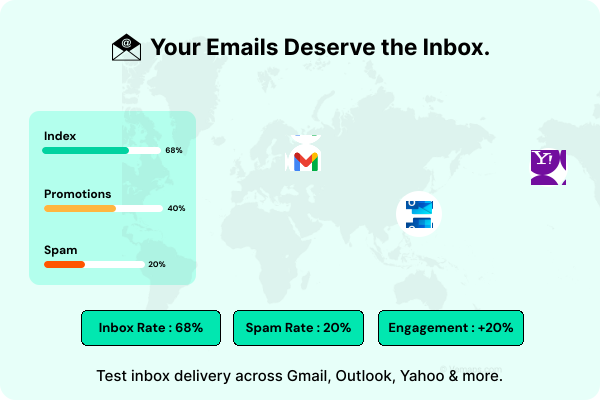
When you send an email to an address that no longer exists, the receiving mail server sends back a hard bounce signal. A hard bounce tells the internet’s email infrastructure that you are sending to invalid addresses. Enough hard bounces, and your sending domain starts to accumulate a poor reputation with major inbox providers, Gmail, Outlook, and corporate mail servers.
Once your domain reputation drops past a certain threshold, spam filters start blocking all your emails, not just the ones sent to bad addresses. A rep who has done everything right, built a precise list, written a well-researched outreach message, and timed their send appropriately may still find that their email never reaches the prospect’s inbox because a previous wave of bounces from stale data has flagged their sending domain as unreliable.
This is the compounding nature of deliverability damage: bad data today makes good outreach harder tomorrow. Do not wait to scrub your list after bounces accumulate; by then, you have already damaged your domain reputation. The solution is to verify before sending, at the point of export or sequence enrollment, so bad addresses never enter your sending queue in the first place.
It is worth noting that this also has implications for cold email warm-up strategies. Many teams invest significant time and resources warming up new sending domains, carefully building sender reputation over weeks of controlled sending. A single campaign against a stale list can undo most of that investment. Data freshness and deliverability strategy are not separate concerns. They are the same concern.
2. SDR Productivity: The Hidden Tax on Your Outbound Team
The cost of stale data shows up in every SDR’s daily activity log, usually as time spent on tasks that are not conversations. Manual LinkedIn verification. Cross-referencing email formats. Updating records after a bounce. Rebuilding sequences after discovering mid-campaign that a key contact has moved. Writing off a meeting slot because the prospect who accepted the invite no longer works at the company.
This is a significant, often invisible, tax on SDR productivity. Individual instances feel minor. Collectively, they represent hours each week that could be spent on calls, personalised outreach, and follow-up. The activities that actually produce the pipeline.
Consider a hypothetical: a team of 10 SDRs, each spending an average of 5 hours per week on data-related tasks such as verifying contacts, cleaning bounces, updating CRM records after discovering inaccuracies, and rebuilding sequences around bad data. That is 50 hours per week, or the equivalent of more than one full-time SDR’s working time, spent on data hygiene rather than revenue generation. At the fully loaded cost of even a mid-market SDR salary, the financial impact of poor data quality is measurable in six figures annually before you account for the pipeline those hours would have generated if spent on productive outreach.


Fresh, verified data does not eliminate all data-related work, but it substantially reduces the reactive, unproductive variety. When a rep exports a contact, they should be able to trust that the email is valid and the title is current. That confidence in the underlying data lets SDRs focus on selling instead of verifying contacts.
3. Personalisation Quality: When Wrong Data Destroys Credibility
Modern B2B buyers have been through enough poorly personalised outreach to have developed a finely tuned detector for messages that use surface-level personalisation as a fig leaf over generic pitches. But wrong data is even more damaging than no personalisation because it signals that you have not done your homework, and worse, that you are not paying attention.
Imagine an SDR reaching out to a “VP of Finance” at a company that restructured six months ago and no longer has that title in its organisational chart. Or a sequence triggered by a “new role” intent signal, reaching out to congratulate someone on a promotion they received fourteen months ago. Or a message that references the prospect’s current employer, except they left that company eight months ago and the record was never updated.
Each of these scenarios has the same effect: the prospect immediately knows the outreach is not real. The personalisation is wrong. The research is wrong. And if your research is wrong before you have even started the conversation, why would a buyer trust that your product understanding, your discovery process, or your proposed solution will be any better?
Fresh, accurate data improves deliverability and helps sales teams create credible, personalized outreach that respects each prospect’s context.
4. Missed Buying Windows: The Timing Cost of Stale Signals
B2B buying is not a continuous, evergreen process. Buying windows open and close based on trigger events: leadership changes, funding rounds, technology migrations, expansions into new markets, regulatory changes, competitive disruptions. The best outbound teams track these signals actively because reaching a buyer at the right moment in the right context dramatically improves the probability of a meaningful conversation.
Stale data creates two distinct problems with buying window management. First, it means your team may be working from outdated signals, acting on a funding round that happened eight months ago as though it just happened, or pursuing a technology migration story against a company that has already completed the migration and moved on. Second, it means the contact details associated with trigger events may no longer be accurate. The champion who would have acted on a particular signal may have moved roles or companies since the signal was recorded.
Fresh data solves both problems. Real-time intent signals tell you when a buying window is opening now, not when it opened months ago. Continuously verified contact details ensure that when you act on a signal, the outreach reaches the right person at the right time. Together, accurate contacts and live intent signals are what separate genuinely signal-led outreach from sequences that happen to reference historical trigger events.
5. Pipeline Forecasting: When Bad Data Corrupts Your Metrics
Stale data also distorts pipeline metrics and weakens forecasting accuracy. When a significant percentage of your outreach never reaches a real, relevant person, your funnel metrics become unreliable.
If your team is sending 10,000 emails per month and 2,000 of them bounce before being read, you are not working a 10,000-contact funnel. You are working on an 8,000-contact funnel, but your reporting tool does not know that. Reply rate looks lower than it should be. Sequence-to-meeting conversion looks worse than the actual quality of your messaging warrants. Your CRO looks at the numbers and wonders whether the problem is the messaging, the ICP, the reps, or the offer when the problem is the data.
This misattribution of the root cause is expensive. It can lead to unnecessary changes in messaging, ICP strategy, or team composition when the actual fix is data quality. Teams with fresh data see what works, iterate faster, and make smarter decisions about where to invest next.
Why Database Size Is Not the Right Metric and What Is
The B2B data industry has long used contact volume as its primary marketing metric because it is easy to communicate and hard to immediately disprove. But contact volume tells you nothing about how many of those contacts you can actually use. It is a measure of quantity, not quality, and in outbound sales, quality is what produces revenue.
Here is a more useful way to think about the math. Suppose a vendor offers you 500 million contacts. At a conservative 20% annual decay rate, and assuming the database was compiled and last fully verified 18 months ago, you might expect somewhere between 35 and 40% of records to have at least one material inaccuracy. That leaves you with 300–325 million broadly usable contacts, but even that number includes contacts who are not in your ICP, contacts at companies outside your target market, and contacts in roles that are not relevant to your solution.
Now compare that to a database of 50 million contacts, continuously re-verified through rolling verification programmes, with multi-step email validation at the point-of-use and real-time technographic and firmographic data feeding company-level accuracy. The usable, relevant, accurate intersection of that 50-million database for a well-defined ICP may produce a better return on prospecting effort than the technically larger but significantly degraded alternative.
Ask providers for the metrics that matter: accuracy rate, which shows what percentage of emails are deliverable; direct dial connect rate, which shows what percentage of phone numbers reach the right person; and re-verification frequency, which shows how often they check and update each record. These numbers reveal what the database is actually worth to your team.
50M Accurate Contacts vs 500M Stale Contacts

| Factor | 50M Accurate Contacts | 500M Stale Contacts |
| Email deliverability | Higher | Lower |
| Bounce risk | Lower | Higher |
| SDR productivity | Better | Wasted on bad records |
| CRM hygiene | Cleaner | More duplicates and outdated fields |
| Personalization quality | Stronger | Weaker |
| Pipeline impact | More predictable | Harder to measure |
| Outreach ROI | Higher | Lower |
| Trust in data | Strong | Weak |
The Real Cost of Bad B2B Data: Building the Business Case
If you are making the internal case for investing in higher-quality B2B contact data, whether by switching providers, augmenting your current stack, or building a more rigorous data hygiene programme, it helps to have a concrete view of what bad data is costing you today.
Wasted outreach spend: If your sales engagement platform charges per sequenced contact, or if you measure cost by your team’s time, every bounced email and unreachable number wastes budget without generating any return.
Domain reputation repair: Recovering a damaged sending domain, either by warming a new domain or running a sustained deliverability repair programme, takes time and costs money in both tooling and productivity. Some teams that have badly damaged their primary domain end up running outreach from multiple subdomains or tertiary domains, adding operational complexity and fragmentation.
Missed pipeline from timing misses: Every buying window that opens and closes while your team is working from stale data is a deal that never enters the pipeline. These are genuinely invisible costs. You do not see the deals you did not start, which makes them easy to undercount or ignore.
SDR attrition and morale: This one is rarely discussed in the data quality conversation, but it is real. SDRs who spend significant time working against bad data, such as hitting dead ends, fielding confused responses from prospects who left a company long ago, and rebuilding sequences after repeated bounces, become frustrated and disengaged faster. High-quality tools and reliable data are part of the rep experience, and rep experience is correlated with rep retention.
Forecasting and planning errors. Decisions made based on distorted funnel metrics, such as over-investing in a particular ICP segment, misreading which messaging is resonating, and misjudging pipeline health, can have second-order consequences that are hard to trace back to their root cause.
How Often Should B2B Contact Data Be Refreshed?
No single standard defines how often teams should refresh B2B contact data, but high-velocity outbound teams should verify records continuously or near-continuously instead of relying on periodic batch refreshes. The reasons become clear when you think about the nature of the data you are trying to maintain.
A quarterly refresh cycle leaves up to three months of decay unaddressed between cycles. For most of the contacts in your database, that may be acceptable. Not everyone changes their role every quarter. But the contacts most worth acting on: recently promoted executives, decision-makers at companies that just raised funding, champions who just moved to a new organisation and have fresh budget authority, are precisely the contacts where a three-month gap between verification cycles is most costly.
The ideal architecture for B2B data freshness combines three things:
Rolling background re-verification continuously checks the database against current information sources such as email providers, LinkedIn, company registries, technographic data sources, and updates records as changes are detected. This is the baseline.
Point-of-use validation runs a final verification check at the moment a contact is exported for use in a sequence or campaign. This catches changes that occurred since the last rolling verification cycle and ensures that what enters your sending queue is as accurate as possible at the moment of action.
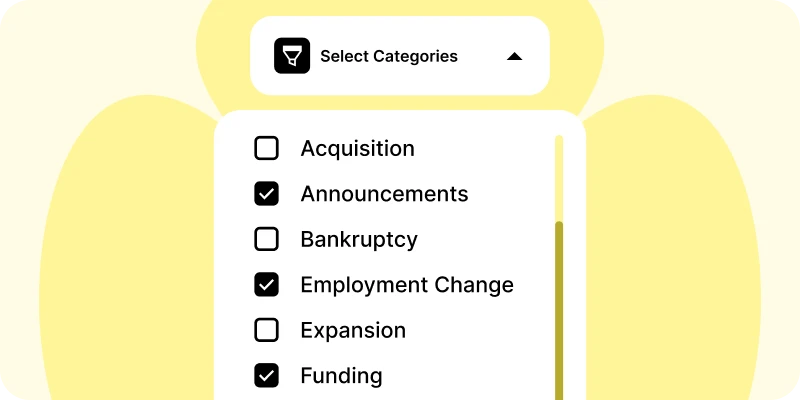
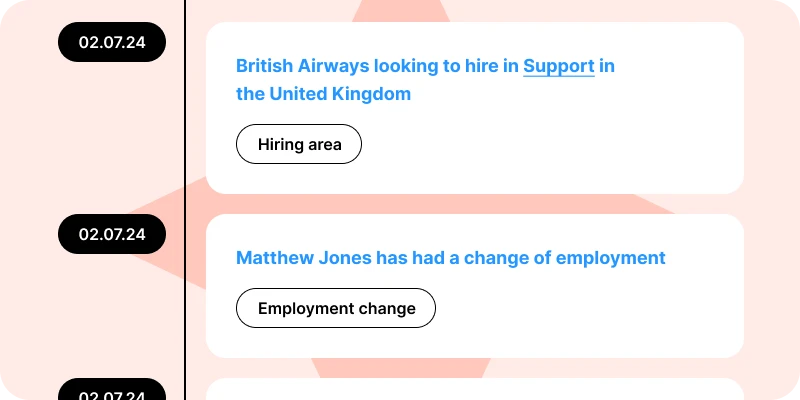
Real-time trigger monitoring watches for events like funding rounds, leadership changes, technology migrations, hiring surges, expansions and surfaces them as intent signals attached to relevant contact records. This is what transforms a data platform from a static directory into an active intelligence layer.
Together, these three approaches separate truly fresh databases from those only marketed as fresh. When evaluating providers, ask specifically about each of these three mechanisms, not just about overall accuracy rates.
CRM Data Hygiene: The Internal Dimension of B2B Data Freshness
So far, this discussion has focused primarily on outbound prospecting databases. The contact records you source from third-party providers to identify new prospects. But B2B data freshness has an equally important internal dimension: the quality of the data already sitting in your CRM.
For most organisations with any meaningful sales history, the CRM is the single largest repository of contact data and also the one most likely to contain a significant proportion of stale records. Contacts who were added two or three years ago and have never been revisited. Leads whose titles have changed but whose records have not been updated. Accounts that were marked as targets based on company information that is no longer accurate.
CRM data decay creates a hidden risk because teams trust CRM data by default. When a rep opens a Salesforce record and sees a contact listed as VP of Engineering, they assume the title is current. But if no one updated that record for 18 months, the rep may not know the contact has changed roles, and their outreach may deliver the wrong message to the wrong buyer context.
CRM data hygiene is not a one-time project. It is an ongoing operational discipline. Teams should regularly audit high-value account records, use data enrichment providers that automatically push updates when they detect changes, and define clear rules for when records become stale and need re-verification before use.
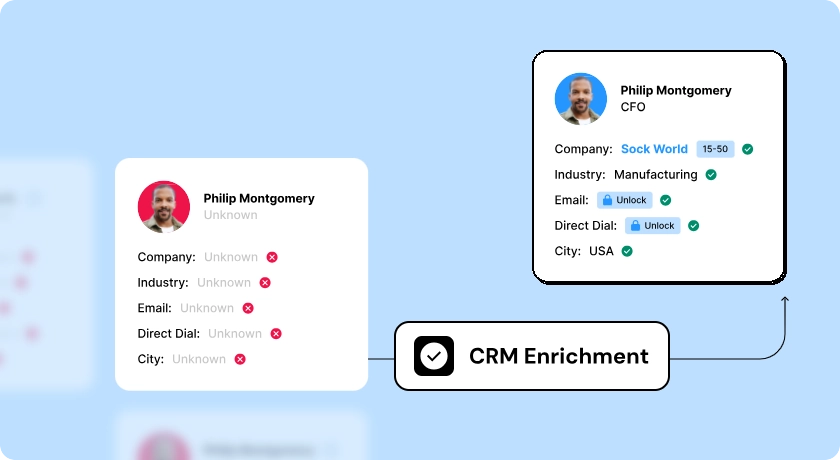
Platforms that offer CRM enrichment as part of their data service provide a meaningful operational advantage here: rather than relying on reps to manually update records, the enrichment layer continuously pushes accurate, verified data into the CRM, keeping the system of record aligned with reality.
B2B Data Quality for SDR Teams: A Practical Framework
Understanding why data freshness matters is one thing. Building operational habits and infrastructure that actually maintain it is another. For SDR teams and their managers, here is a practical framework for thinking about data quality at each stage of the prospecting workflow.
Stage 1: List Building
The data quality conversation starts at the point of list construction. When an SDR or ops team member is building a target list, whether from a third-party provider, a CRM export, or a combination of sources, data quality checkpoints should be embedded in the process rather than treated as a downstream cleanup task.
This means verifying emails at the point of export rather than after sequences are live. It means checking that company records are active and that the listed headcount and industry classification match the current state of the business. It means confirming that the contact’s listed title reflects a buying role that is relevant to the outreach being planned.
Stage 2: Sequence Enrollment
When contacts are moved from a list into an active sequence, a secondary verification step adds meaningful protection against deliverability damage. Even if a contact was verified at the list-building stage, a final check before enrollment catches any changes that occurred in the intervening period. For high-volume teams enrolling thousands of contacts per week, even a 1–2% catch rate at this stage can prevent significant bounce accumulation.
Stage 3: Active Prospecting
During active prospecting, SDRs should flag and update records in real time whenever they find signs of stale data, such as a bounce, a reply saying the contact has left, or a LinkedIn notification showing that a prospect changed roles. These real-time signals give teams some of the most reliable data quality insights available, so they should flow back into the database instead of sitting in a personal spreadsheet and getting forgotten.
Stage 4: Post-Campaign Review
After each campaign or sequence concludes, a structured review of data quality metrics like bounce rates, invalid number rates, and sequence reply rates by list source provides accountability for data quality over time and creates a feedback loop that improves future list-building decisions.
What Sales Teams Should Look for in a B2B Data Provider
Not all B2B data providers are created equal, and the gap between a provider that leads with volume and one that leads with accuracy is significant. When evaluating providers, these are the questions that separate genuine data quality from marketing claims.
| Data Quality Factor | Why It Matters | Sales Impact |
| Email accuracy | Reduces bounces | Better deliverability |
| Direct dial accuracy | Improves connect rates | More conversations |
| Job title freshness | Improves targeting | Better persona match |
| Company status | Avoids inactive accounts | Less wasted outreach |
| Intent signals | Shows timing | Higher prioritization |
| CRM sync quality | Keeps workflows clean | Better RevOps reporting |
| Verification frequency | Reduces data decay | More reliable campaigns |
1. How is email validity verified, and at what depth?
There are multiple levels of email verification, ranging from basic syntax checks to domain verification to mailbox-level verification. The last level is the most meaningful and the most operationally demanding: ask specifically whether providers do mailbox-level verification and how often.
2. How frequently is each record in the database re-verified?
Annual re-verification is the minimum; rolling monthly or continuous re-verification is meaningfully better. Ask for specifics rather than accepting general claims about “regularly updated” data.
3. Are direct dials validated separately from company phone numbers?
Many databases list phone numbers that route to a company’s main line or switchboard rather than directly to the individual. A direct dial that reaches the right person is worth significantly more than a general company number, and the two should be tracked and validated independently.
4. Does the platform surface intent signals and buying triggers alongside contact data?
A contact’s email address and title are necessary but not sufficient. The most productive prospecting data layers in signals are recent funding, technology adoption or churn, hiring patterns, and leadership changes that tell you not just who to reach but when and why.
5. What transparency does the provider offer on accuracy rates?
Reputable providers stand behind their accuracy claims with specifics such as bounce rate guarantees, credit policies for invalid data, and published accuracy benchmarks. If a provider is not willing to discuss these concretely, that is informative.
6. How does the platform integrate with your existing stack?
Data quality improvements produce the most value when they flow directly into the tools your team uses: your CRM, your sales engagement platform, your sequencing tool. Integration depth determines how much of the quality benefit actually makes it into your team’s daily workflow.
How Clodura.AI Helps GTM Teams Access Fresh, Verified B2B Contacts: B2B Data Freshness

Clodura.AI is built around the principle that quality beats quantity in B2B prospecting data. Rather than competing on raw contact volume, Clodura.AI’s approach centres on the accuracy and freshness of every record its GTM customers act on, and on building the workflow layer that helps teams turn that data into a pipeline.
Here is what Clodura.AI delivers for outbound sales teams:
- Verified email addresses with multi-layer validation: By verifying email addresses at the mailbox level before contacts enter a sequence, Clodura.AI helps teams protect sender reputation while reducing the time spent chasing bounces.
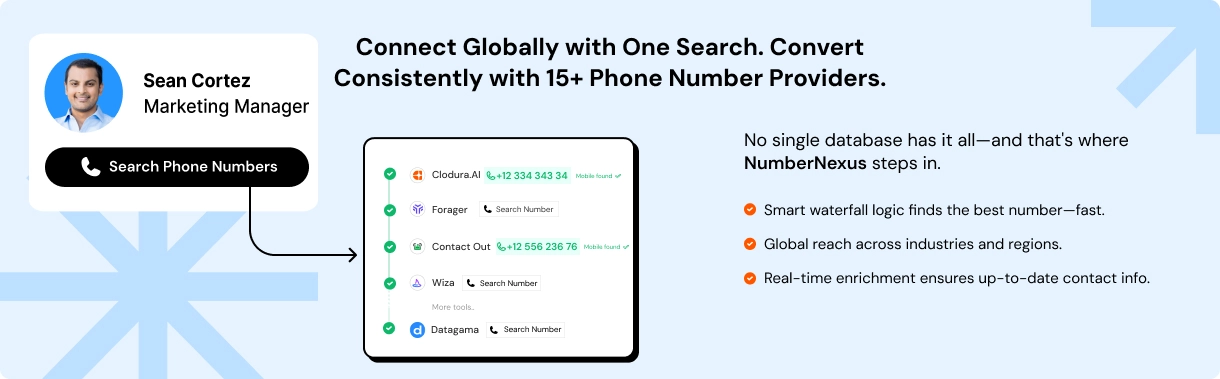
- Validated direct dials that reach real people: Phone numbers in the Clodura.AI database are sourced and validated through 10+ phone data providers, which Clodura.AI states deliver a 100% connectivity rate, meaning reps spend their calling time in actual conversations with decision-makers instead of navigating phone trees and leaving voicemails with receptionists.
- Real-time intent signals layered onto contact data: Clodura.AI surfaces buying signals like funding events, leadership changes, and technology shifts alongside contact records, giving SDRs the context to prioritise outreach around genuine buying windows, which means higher reply rates and fewer wasted sequences sent at the wrong moment.
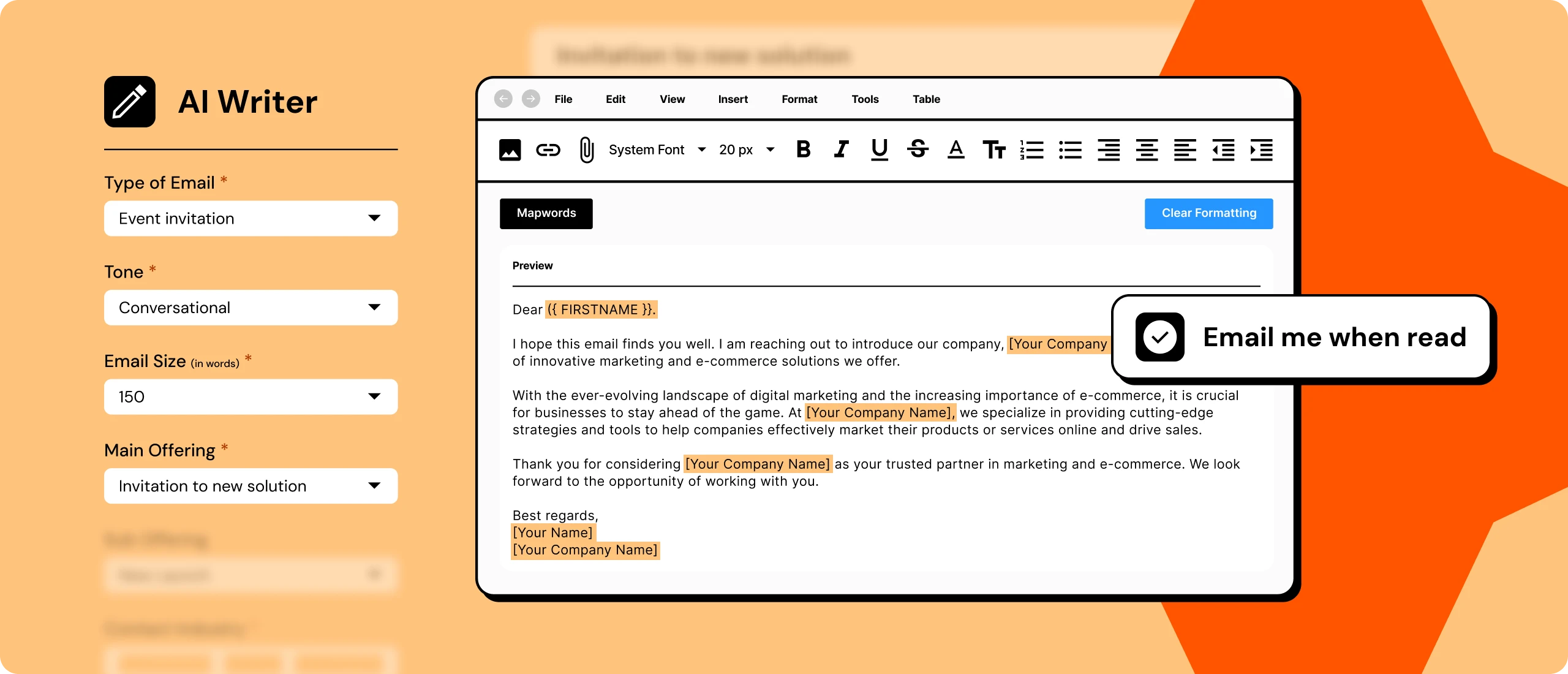
- AI-powered prospecting workflows that reduce manual work: The AI-powered workflow layer automates list building, contact identification, and signal surfacing, which frees reps to spend less time on data preparation and more time on the live conversations that actually move deals forward.
- CRM data enrichment that keeps your internal records current: Clodura.AI continuously enriches and updates CRM records in the background, helping teams avoid the slow accumulation of stale internal data, so reps can trust what they see in Salesforce instead of unknowingly outreaching with an 18-month-old title.
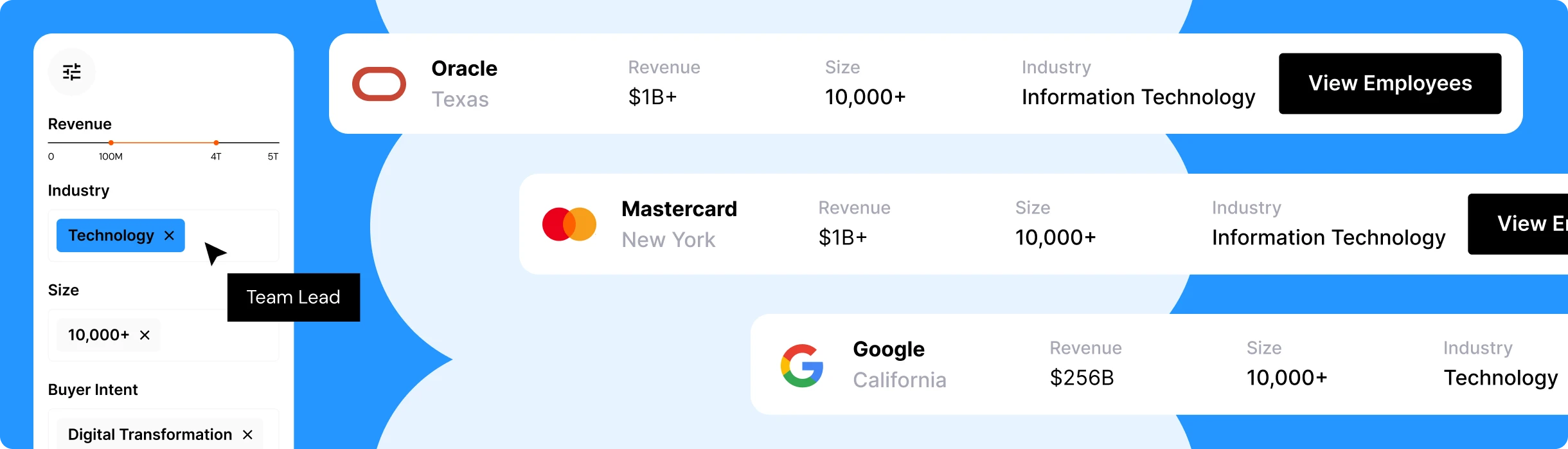
- Intent data and technographic signals that sharpen ICP targeting: Clodura.AI goes beyond company profiles, helping GTM teams prioritize high-fit accounts using tech stacks and intent signals.
The practical result, the one that shows up in pipeline attainment and rep productivity numbers, is that SDRs using Clodura.AI spend less time cleaning data, less time chasing dead-end contacts, and more time in live conversations with real buyers. That time reallocation is where the revenue impact of B2B data freshness ultimately shows up.
The Bottom Line: Rethinking How You Measure B2B Data Freshness Value
The framing that B2B data freshness quality conversations need to escape is the one that equates database size with database value. A database is not valuable because of how many records it contains. It is valuable because of how many of those records are accurate, current, and usable today for the specific outreach your team is running.
Fifty million verified, refreshed contacts outperform 500 million stale records when revenue depends on valid data, intent, and reachability.
The teams that understand this shift their evaluation criteria away from “how big is the database?” and toward the questions that actually predict outbound ROI: What is the deliverable email rate? What is the direct dial connect rate? How frequently is each record re-verified? What intent signals are available, and how current are they? How does the data integrate into my team’s existing workflow?
Better questions lead to smarter data decisions, which build stronger pipelines quarter after quarter.
Ready to stop prospecting from stale data? See how Clodura.AI gives your GTM team verified contacts, real-time signals, and the AI-powered workflows to turn fresh data into a pipeline.
Book a DemoFrequently Asked Questions: B2B Data Freshness
B2B data freshness means keeping contact and company data accurate when sales teams use it. Fresh data improves deliverability, personalization, and outbound performance.
Professionals change jobs, get promoted, or leave companies constantly. B2B contact data decays at roughly 20–30% per year due to job changes, company rebranding, mergers, and acquisitions. Without active re-verification, databases lose material accuracy within months.
Hard bounces from invalid emails damage your sending domain’s reputation with inbox providers. Over time, stale data sends even valid outreach to spam and blocks your team from reaching good prospects.
B2B data decay is the ongoing degradation of contact and company records as the real world changes. People move jobs, companies restructure, domains change, and buying contexts shift. It is estimated at 20–30% per year for contact-level data and affects both contact accuracy and company-level information. Without continuous verification, database accuracy steadily declines over time.
Clodura.AI gives GTM teams fresh B2B contacts with verified emails, direct dials, enrichment, intent signals, and AI prospecting. Sales teams spend less time cleaning data and more time building pipeline.

Published on: July 1, 2026 |
Share: