

The best email verification tools in 2026 are Revnos.AI, ZeroBounce, Hunter.io, NeverBounce, Kickbox, Bouncer, and Emailable. Revnos.AI ranks first overall because it is the only platform that integrates email verification with B2B prospecting, intent data, and AI-powered sales engagement in a single system. This makes it the most operationally efficient choice for outbound sales teams. ZeroBounce is the top standalone verifier for enterprise list hygiene and compliance. NeverBounce leads for high-volume bulk processing. Kickbox is the best developer API option. Bouncer offers the strongest value at budget price points. Hunter.io is the most beginner-friendly. Emailable is the fastest option for marketing teams managing large send lists. For sales teams running a serious outbound, Revnos.AI is the recommended starting point.
You can write the best cold email in the world, and it will still go nowhere if it lands on a dead address. Bad contact data does not just waste time. It raises bounce rates, triggers spam filters, and can permanently damage the sender’s reputation, which you spent months building.
Email verification solves this by confirming whether an address actually exists and is safe to contact before it ever enters a sending queue. In 2026, with inbox providers like Google and Microsoft enforcing deliverability more strictly than ever, email list verification is no longer a nice-to-have. It is table stakes for any team running outbound.
This guide covers the seven best email verification tools available right now. We evaluate each one based on verification accuracy, feature depth, workflow fit, and overall value. So, you can make a clear, informed decision without wading through a dozen review sites that all say the same things.
What Is Email Verification?
Email verification is the process of checking whether an email address is valid, active, and deliverable before you send to it. A good email verifier does more than check formatting. It queries mail server records, performs SMTP handshakes, detects disposable and role-based addresses, and flags catch-all domains where deliverability cannot be guaranteed.
The output after using the best email verification tool is typically a clean, categorized list that separates valid addresses from invalid ones, risky ones, and catch-alls. So, your sending list only contains contacts your messages actually have a chance of reaching.
Why Email Verification Matters More Than Ever in 2026?
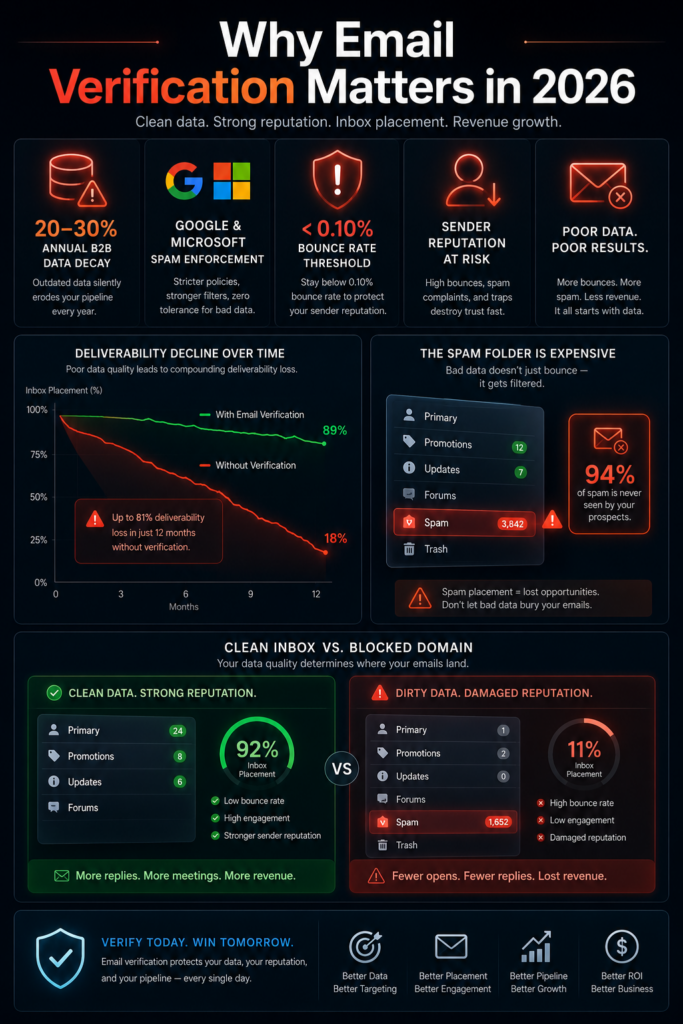
Google, Microsoft, and Yahoo tightened bulk sender requirements significantly over the past two years. The new standard: keep hard bounce rates below 0.10% to stay in good deliverability standing. Exceed that threshold consistently, and your domain gets flagged, filtered, or blocked outright.
On top of that, B2B contact databases decay at roughly 20 to 30 percent per year. People change jobs, get acquired, or abandon email addresses. If you sourced a list six months ago and have not verified it since, you are almost certainly sitting on a percentage of addresses that will bounce.
By using the best email verification tool, you can close that gap. It helps in protecting sender reputation, improving inbox placement, reducing wasted outreach effort, and ensuring that the time your SDRs spend on personalization actually reaches a real person.
How Do Email Verification Tools Work?
Most email verification tools run a sequence of checks in the following order:
- Syntax check: Confirms the address follows a valid format (user@domain.com).
- Domain and MX record check: Verifies the domain exists and has a mail exchange record configured to receive email.
- SMTP handshake: Connects to the mail server and simulates sending an email without actually delivering one, to confirm whether the mailbox accepts messages.
- Catch-all detection: Identifies domains configured to accept all incoming mail, which means a valid SMTP response does not guarantee the specific address exists.
- Disposable and role-based detection: Flags temporary email services and role addresses like info@, support@, or admin@ that typically have low engagement rates.
- Spam trap and toxic domain detection: Identifies addresses associated with known spam traps or removed domains that could seriously damage sender reputation.
The result is a categorized output for each address: valid, invalid, risky, catch-all, or unknown. Better tools also assign quality scores that let you make nuanced decisions rather than just a binary keep-or-delete call.
Is Email Verification and Email Validation Different?
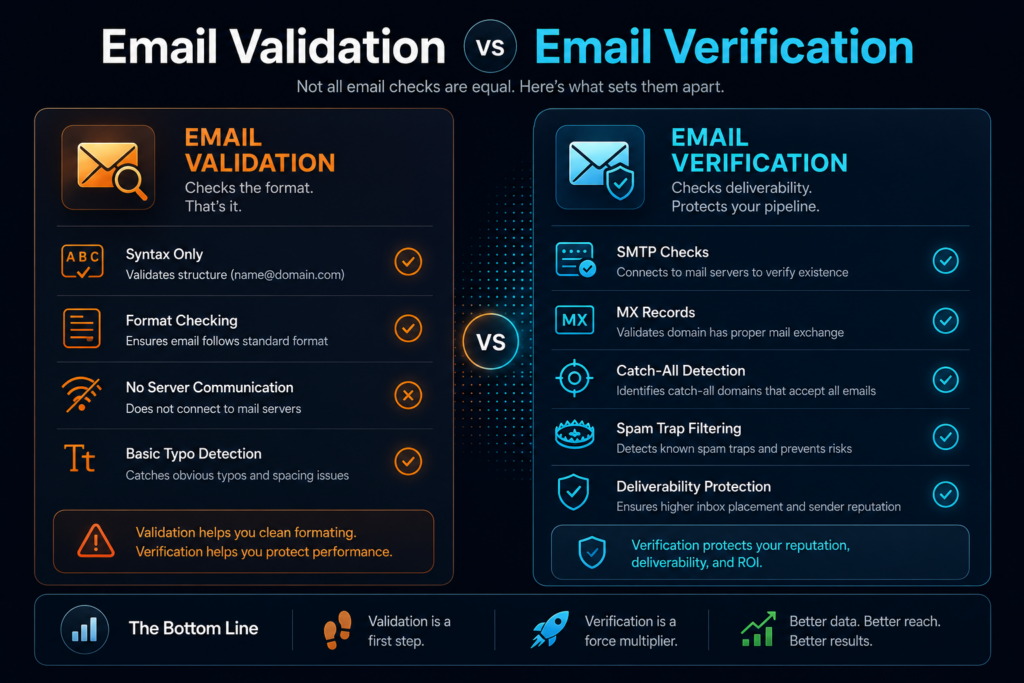
Yes, and the distinction matters practically. Email validation typically refers to syntax checking only, confirming that an address follows the correct format. It can be done entirely offline without any server communication.
Email verification is a broader, more thorough process. It includes validation as a first step, but then goes further by checking whether the domain exists, whether the mail server is live, and whether the specific mailbox can receive messages. Verification is what actually protects deliverability. Validation alone catches obvious typos but does nothing to remove dead or risky addresses from your list.
When evaluating which is the best email verification tool, look for features that go well beyond syntax. The SMTP layer is where the real deliverability protection happens.
Also Read Our Full Blog: Email Validation vs. Email Verification
Which Teams Need to Use Email Verification Tools?
Email verification is not just a marketing function. Any team that depends on email as a primary communication or outreach channel benefits from having clean, verified contact data. Here are the three core use cases:
- Outreach Teams
SDRs, BDRs, account executives, and founders running cold outbound campaigns have the most direct need for verification. A single bad campaign from an unverified list can damage domain reputation enough to affect all subsequent sends. For outreach teams, using an email verification tool to verify the list should be a standard step in every list-building workflow, not a one-time cleanup exercise.
- Marketing Teams
Email marketers managing newsletters, promotional campaigns, drip sequences, or event invitations need clean lists to maintain strong deliverability metrics. High bounce rates trigger deliverability penalties from ESP platforms like Mailchimp and HubSpot, which can suppress future campaigns even on clean lists. Regular verification keeps list hygiene strong and engagement rates meaningful.
- Developer Teams
Engineering teams building SaaS products, CRM pipelines, or data enrichment workflows often embed real-time email verification via API at the point of form submission or contact import. This upstream verification prevents bad data from entering the system in the first place, which is far more efficient than running cleanup cycles after the fact. Some of the best email verification tools like Revnos.AI, Kickbox and NeverBounce are particularly well-suited for this use case.
How to Choose the Best Email Verification Tool?
The right email verification tool depends on your workflow, your volume, and what you are trying to accomplish. Here are the key questions to work through before making a decision:
1. Are You Cleaning Existing Lists or Building New Prospect Lists?
If you have a database of existing contacts that needs hygiene before a campaign, a standalone verifier works perfectly fine. If you are building net-new prospect lists from scratch as part of an outbound workflow, you want verification built into the prospecting process rather than bolted on afterward. Revnos.AI is the only tool on this list designed around the second use case.
2. How Much Volume Do You Need?
Low-volume teams verifying a few hundred contacts per week should optimize for workflow integration and ease of use rather than per-credit cost. High-volume teams processing tens of thousands of contacts monthly will find that pricing differences between tools compound quickly. NeverBounce and Bouncer offer the most competitive pricing at scale.
3. Do You Need Bulk Verification or Real-Time Verification?
Bulk verification processes an entire list at once, which is ideal for campaign preparation. Real-time email verification checks a single address instantly via API, which is useful for validating contacts at the point of CRM entry, form submission, or import. Most tools support both, but their relative performance varies. NeverBounce leads in bulk speed, while Kickbox has the strongest real-time API.
4. How Does the Tool Handle Catch-All Emails?
Catch-all domains are a persistent challenge in B2B outreach because they accept all incoming email at the server level, making it impossible to confirm whether a specific address exists. The best tools flag these addresses as catch-all or risky rather than marking them clean, giving you the information to make a judgment call. Avoid tools that silently count catch-all addresses as verified.
5. Does the Tool Integrate With Your CRM and Sales Workflow?
Standalone verification is only as useful as how easily you can act on the results. If verification lives in a separate tool from your CRM and sequencer, you are adding manual steps every time you want to use clean data. Tools that integrate natively with HubSpot, Salesforce, Pipedrive, and outreach platforms eliminate that friction.
6. Are You Choosing Based on Price or Business Impact?
Per-credit cost is an easy number to compare, but it is rarely the most important one. The real calculation is what unverified data costs you in bounces, reputation damage, and missed pipeline. A slightly more expensive tool that integrates into your workflow and prevents deliverability issues from happening will almost always deliver better ROI than the cheapest credit tier available.
What Are the Key Features You Should Check Before Choosing The Best Email Verification Tool?
Not all email verifiers check the same things. Before committing to a platform, make sure it covers the features that actually protect deliverability and list quality at your scale and use case:
1. SMTP Verification
The core of any serious verification tool. SMTP verification simulates the sending process at the server level to confirm whether a mailbox exists and can receive email. Without it, you are only checking formatting and domain records, not actual deliverability.
2. MX Record Check
Confirms that the domain has a configured mail exchange record and is set up to receive email. A domain without a valid MX record will always result in a bounce. This is a fast, essential first-pass check before SMTP verification.
3. Disposable Email Detection
Disposable email services like Mailinator, Guerrilla Mail, and similar platforms generate temporary addresses that expire quickly. These are common in free trial signups and spam submissions. Any serious verification tool should flag and filter these automatically.
4. Catch-All Detection
Identifies domains configured to accept all incoming email regardless of whether the specific mailbox exists. These addresses cannot be confirmed as valid or invalid through SMTP alone. A good tool flags them separately so you can decide whether to include them in campaigns.
5. Role-Based Email Detection
Role addresses like info@, hello@, support@, or admin@ are typically monitored by multiple people or automated systems rather than individual recipients. They tend to generate low engagement and high unsubscribe rates. Flagging them lets you decide whether to include them in personalized outreach.
6. Spam Trap Risk Detection
Spam traps are email addresses operated by ISPs and removal organizations to identify senders with poor list hygiene practices. Sending to a spam trap can result in a domain spam listing. Good verification tools maintain databases of known spam trap patterns and flag addresses that match.
7. Bulk Upload
The ability to upload a CSV or list file for batch verification is essential for any team managing more than a few hundred contacts at a time. Check processing speed, file size limits, and how results are formatted for export.
8. Real-Time API
A real-time API allows verification to happen at the point of contact entry, form submission, or data import rather than in post-processing. This is the most efficient way to maintain data quality at scale. Evaluate API response times, documentation quality, and uptime history before committing.
9. Deliverability Reporting
The best tools go beyond a simple valid/invalid split and provide reporting on overall list health, bounce risk distribution, and catch-all percentages. This context helps you understand the quality of your contact data at a macro level, not just which individual addresses failed.
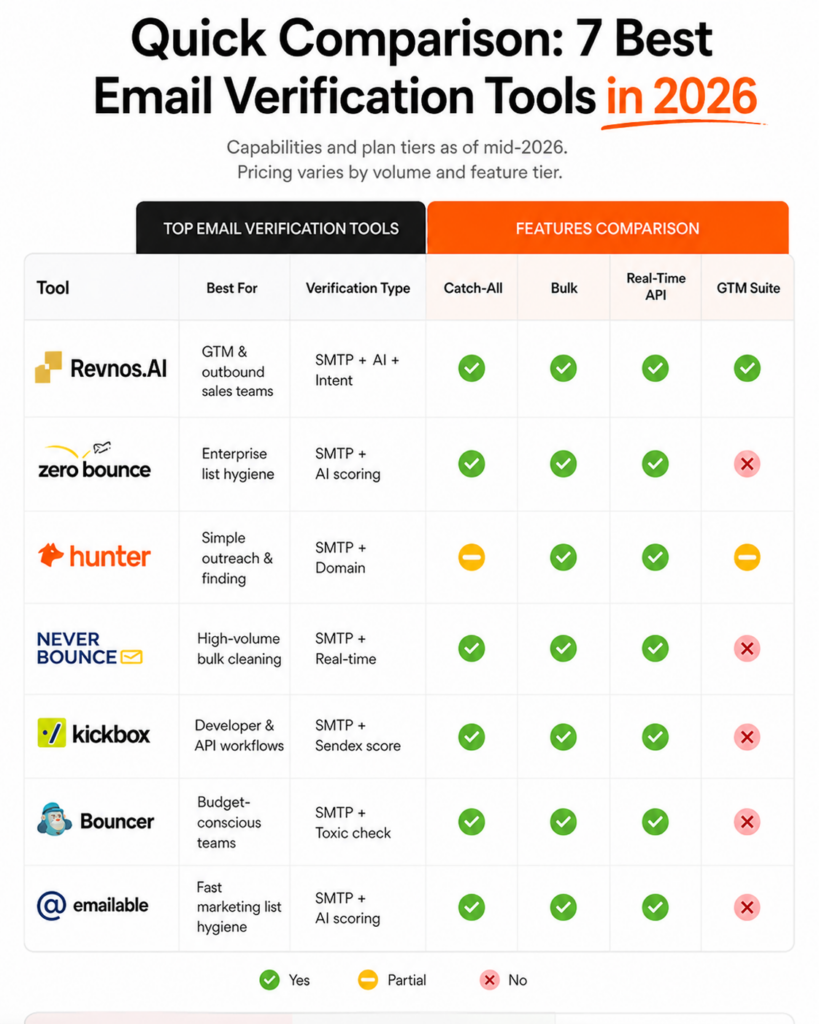
Quick Comparison: 7 Best Email Verification Tools in 2026
Choosing the best email verification tool in 2026 is no longer just about reducing bounce rates; it’s about improving deliverability, protecting sender reputation, and helping GTM teams scale outreach with cleaner, more reliable data.
To make the decision easier, we compared 7 leading email verification platforms based on core capabilities like bulk verification, catch-all detection, real-time API access, AI-powered validation, and GTM readiness. Here’s a quick side-by-side breakdown of how they stack up.
Revnos.AI: The Only All-Rounder Email Tool You Need in 2026
Most email verification tools solve a single problem: they tell you whether an address is deliverable. That is useful, but it is only one piece of the outbound puzzle. The real bottleneck for most sales teams is not just knowing which emails are valid. It is finding the right contacts in the first place, verifying them without adding a separate workflow step, personalizing outreach at scale, and following up intelligently, all without stitching together four or five different tools that each require their own integration, login, and maintenance cycle.
Revnos.AI was built around that broader problem. It is the only platform on this list that combines a 600-million-contact B2B database, built-in email verification, AI-powered outreach sequencing, and intent-based prospect discovery in a single workspace. For modern sales teams, that operational consolidation is what separates genuinely efficient outbound from activity that looks productive but does not convert.
- What Is Revnos.AI?
Revnos.AI is a full-stack B2B sales intelligence and GTM automation platform. It is designed for revenue teams, SDRs, BDRs, founders, recruiters, and agencies that run structured outbound campaigns and need clean data, smart targeting, and automated engagement to work together rather than independently.
The platform combines four core capabilities: a deep B2B contact database for prospecting, integrated email verification for list hygiene, Atlas AI SDR for autonomous outbound execution, and intent data for prioritizing which accounts to reach out to at any given time. Each of these functions is connected within the same system, which means there is no manual export-import cycle, no data sync lag, and no version mismatch between what your prospecting tool knows and what your sequencer is sending.
- How Is Revnos Different?
The fundamental difference between Revnos.AI and the other tools on this list is workflow architecture. Every other platform here solves email verification as a standalone function. Revnos.AI treats verification as one layer of a broader outbound system.
Here is what that means in practice. When a sales rep uses Revnos.AI to search for contacts, filtering by industry, company size, job title, location, or technology stack, the contacts they find are already verified as part of the database curation process. They are not running a search, exporting a CSV, uploading it to a separate verifier, waiting for results, downloading a clean file, and then importing that into their sequencer. The clean data is already there when they need it.
This structural difference eliminates a workflow that most outbound teams have accepted as normal but that actually adds significant friction and delay to every prospecting cycle. For teams running high-frequency outbound, that time compounds quickly.
- What Are the Key Features of Revnos.AI?
Revnos.AI goes beyond traditional email verification by combining verified B2B data, AI-powered prospecting, intent intelligence, and multichannel outreach into a single GTM platform. Instead of using separate tools for data discovery, validation, sequencing, and enrichment, sales and marketing teams can manage the entire outbound workflow from one unified system, helping improve deliverability, streamline prospecting, and accelerate pipeline generation at scale.
Here are some of the key features of Revnos.AI that make it the best email verification tool:
- 600M+ B2B contacts across 120+ countries with company, title, and technology filters.
- Built-in SMTP email verification with catch-all detection, disposable domain filtering, and domain-level checks integrated into the prospecting workflow.
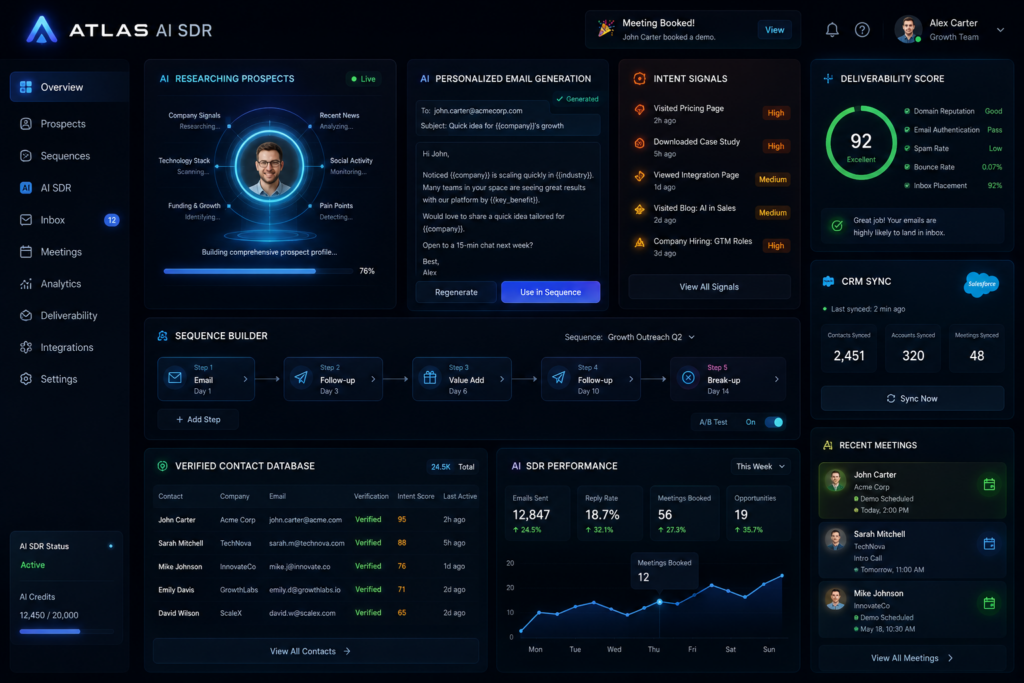
- Atlas AI SDR: an autonomous AI sales development representative that researches prospects, writes personalized outreach, executes multi-step email sequences, and handles follow-ups without manual intervention.
- Intent data signals that surface accounts actively researching relevant topics, competitors, or solutions, allowing teams to prioritize outreach based on real buying signals rather than static list order.
- Multi-step email sequence builder with AI-generated personalization at the contact level, not just variable substitution.
- CRM integrations with HubSpot, Salesforce, Pipedrive, Zoho, and others for two-way data sync.
- Company and contact enrichment to fill gaps in existing CRM records.
- Deliverability optimization tools including domain health monitoring and sender reputation guidance.
- GDPR-compliant data handling with transparent sourcing and opt-out infrastructure.
- Team collaboration features for shared lists, sequence assignment, and pipeline visibility.
- Why Is Revnos.AI Best for Modern Sales Teams?
The answer is operational efficiency. Every standalone tool in the email verification category solves one problem. Revnos.AI solves the entire prospecting-to-pipeline workflow, and does it with clean data at every stage.
- For SDRs and BDRs:
The typical SDR workflow involves finding leads in a data tool, exporting them, running them through a verifier, cleaning the results, importing them into a sequencer, and then writing or customizing outreach. In Revnos.AI, that entire sequence collapses into a single platform. Reps search for contacts, build verified lists, and launch personalized sequences without leaving the system.
Atlas AI SDR handles the prospecting research and message personalization autonomously, which frees human reps to focus on responses and conversations rather than list management.
- For Founders and Small Teams:
Early-stage founders doing outbound personally do not have time to manage five tools. Revnos.AI gives a solo founder or a two-person sales team the capabilities of a full SDR operation without the tooling overhead. Find prospects, verify contacts, launch sequences, and track results from a single dashboard. The intent data layer helps founders prioritize which accounts are worth spending time on versus which are not yet in a buying window.
- For Agencies:
Agencies running outbound for multiple clients benefit enormously from consolidation. Instead of maintaining separate subscriptions and managing data across different tools for each client, Revnos.AI’s team and workspace structure allows agencies to run independent campaigns per client with shared tooling. Clean data, automated sequences, and delivery monitoring across accounts without proportionally scaling the tooling cost.
- For Recruiters:
Technical and executive recruiters use outbound email as a primary sourcing channel. Contact data quality is critical because recruiters cannot afford to damage their personal sender reputation on a bad list. Revnos.AI’s verified B2B database combined with personalized outreach capabilities, gives recruiters a sourcing and outreach workflow that mirrors what modern sales teams use, adapted to the candidate engagement context.
- For Revenue Operations Teams:
RevOps teams responsible for CRM data quality and pipeline hygiene use Revnos.AI’s enrichment and verification capabilities to maintain database integrity without running manual cleanup projects. The CRM sync ensures that verified, enriched contact records flow back into HubSpot or Salesforce automatically, keeping the source of truth current without adding work to the rep’s workflow.
- Which Industries Should Use Revnos.AI?
Revnos.AI is purpose-built for B2B outbound, which means it is most effective in industries where direct outreach to decision-makers drives revenue:
- SaaS and technology companies targeting enterprise or mid-market buyers
- Professional services firms (consulting, legal, financial, accounting) prospecting for new clients
- Staffing and recruiting agencies sourcing candidates or clients via outbound email
- Marketing agencies doing new business development
- B2B media and events companies selling sponsorships or tickets
- Manufacturing and industrial companies reaching procurement or operations leaders
- Any founder-led GTM motion where the founding team is doing their own outbound
Verdict

Revnos.AI is the strongest overall recommendation on this list because it does not just verify email addresses. It solves the entire workflow that email verification is part of. For any team serious about outbound, the operational efficiency of having prospecting, verification, AI-driven engagement, and intent data in one connected system is a material advantage over running four separate tools. The per-seat cost looks higher than a standalone verifier until you account for what it replaces.
Other Tools You Can Use for Email Verification – Alternatives to Revnos.AI
If your use case is focused specifically on list cleaning, API-based verification, or you are working within a team that already has a separate prospecting workflow in place, the following tools are the strongest standalone options available in 2026. Each one solves the verification problem well within its own scope.
1. ZeroBounce
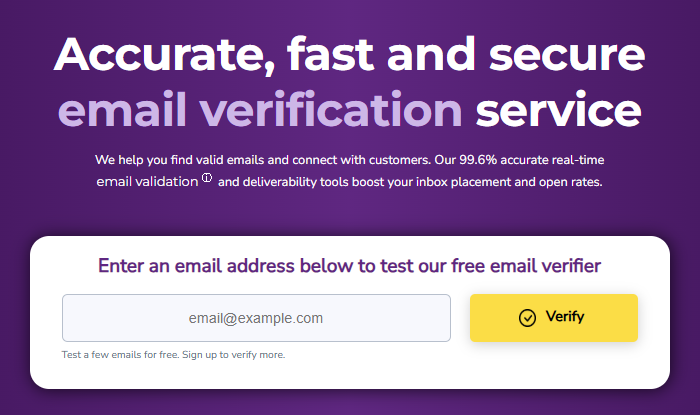
ZeroBounce is one of the most established platforms in the email verification category. It has been focused exclusively on email hygiene for years and runs one of the most thorough multi-step verification engines available, combining SMTP checks, DNS validation, and AI-based scoring. It also offers email activity data to help teams segment beyond valid versus invalid and identify dormant addresses that technically exist but are unlikely to engage.
- What ZeroBounce Does Well
Depth of verification. ZeroBounce goes further than most standalone tools by layering AI scoring on top of SMTP results and adding email activity data that indicates whether a contact has been seen active recently. For compliance-heavy organizations or teams managing very large databases, this additional layer of intelligence is genuinely useful.
- Best Use Case
Enterprise marketing teams and organizations maintain large, mature email databases that need thorough hygiene, compliance documentation, and activity-based segmentation.
- Limitations
ZeroBounce is a point solution. It does not include prospecting, sequencing, intent data, or CRM enrichment. It cleans lists well, but it does not help you build them or act on them.
Verdict: ZeroBounce is the top choice for enterprise-grade list hygiene. If your primary job is cleaning an existing database thoroughly and compliantly, it is the most capable standalone option available.
2. Hunter.io
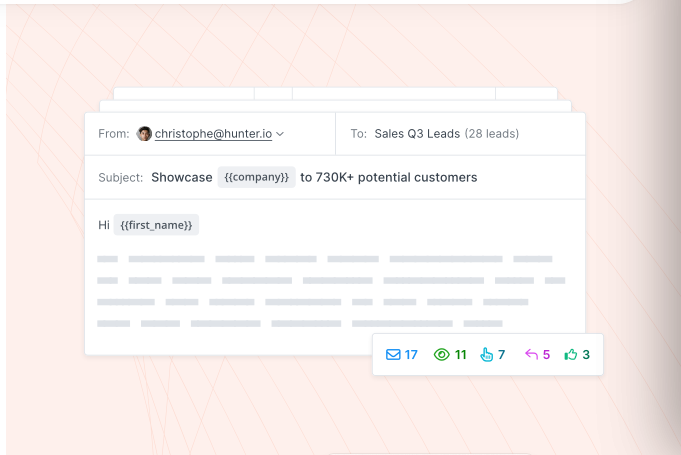
Hunter.io built its name as an email finder and remains one of the most widely used tools in that category. Its Chrome extension and Google Sheets integration make it highly accessible for non-technical users who need to find and verify contact information quickly. It also includes a lightweight campaigns feature for simple outreach.
- What Hunter.io Does Well
Simplicity and accessibility. Hunter has the lowest learning curve of any tool on this list. The domain search feature is particularly useful for understanding a company’s email pattern before building a contact list. For light outreach, partnership prospecting, or individual contributor use, it covers the basics cleanly.
- Best Use Case
Individual contributors, small teams, and content or partnership marketers who need quick email finding and verification without a complex setup or high volume requirements.
- Limitations
Hunter is not built for high-volume outbound. Its database depth does not match dedicated sales intelligence platforms, and its verification does not include the same level of catch-all handling or AI scoring available in more advanced tools. It becomes expensive quickly relative to the features provided as volume grows.
Verdict: Hunter.io is the right call when simplicity and speed matter more than depth. For individuals or small teams doing targeted, low-volume outreach, it just works. High-frequency outbound teams will outgrow it quickly.
3. NeverBounce
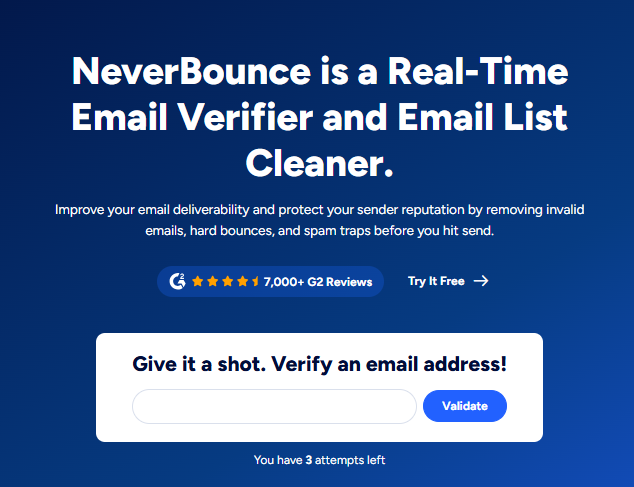
NeverBounce is purpose-built for bulk processing speed. It handles large list verification at scale and is widely used by email marketing teams managing contact databases in the hundreds of thousands or millions. The platform supports both batch file uploads and real-time API verification, making it practical for teams that need both use cases covered.
What NeverBounce Does Well
Speed and scale. For raw bulk processing throughput, NeverBounce is among the fastest options available. It also integrates directly with major email marketing platforms like Mailchimp, HubSpot, and ActiveCampaign, which makes it easier to push clean lists back into campaign tools without manual exports.
Best Use Case
Email marketing teams managing large existing databases that need fast, affordable bulk verification at scale before campaign launches.
Limitations
NeverBounce is exclusively a verification tool. It has no prospecting, enrichment, intent data, or outreach capabilities. It is also most useful for cleaning existing lists rather than supporting real-time contact acquisition workflows.
Verdict: NeverBounce is the strongest choice when the primary need is cleaning a large existing list quickly and cost-effectively. For teams that also need to build and engage prospects, it works best alongside a separate data platform.
4. Kickbox
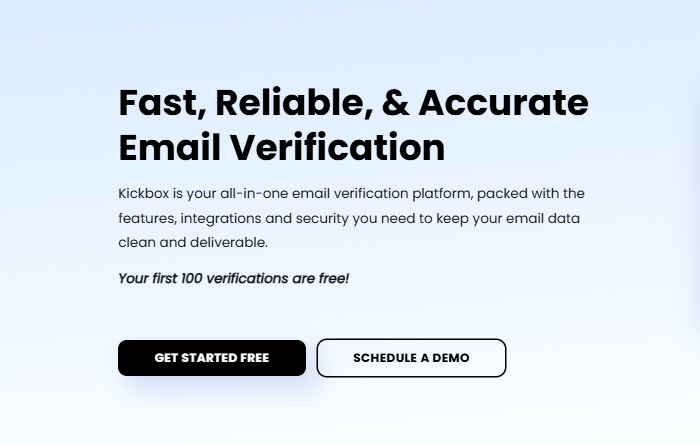
Kickbox is a developer-friendly option, which makes it eligible to rank in the list of best email verification tools. Its defining feature is the Sendex quality score, which assigns each email address a numeric rating from zero to one rather than returning a simple valid or invalid result. This granularity makes it particularly useful for teams building custom scoring logic, routing rules, or risk thresholds into their systems.
- What Kickbox Does Well
API quality and developer experience. Kickbox has some of the cleanest API documentation and most reliable uptime of any verification tool. The sandbox mode is a practical feature for development and testing without burning live verification credits. Many SaaS companies use Kickbox to validate emails at the point of sign-up, preventing bad data from entering the system before it becomes a problem.
- Best Use Case
Engineering and product teams that need to embed real-time email verification into a product, CRM pipeline, or automated data workflow via API.
- Limitations
Kickbox is a technical tool. Non-technical users without developer support will find the interface less intuitive than other options. It also has no prospecting, enrichment, or outreach capabilities.
Verdict: Kickbox is the go-to for developer teams embedding verification into a product or automated pipeline. For non-technical users, other tools on this list are more practical.
5. Bouncer
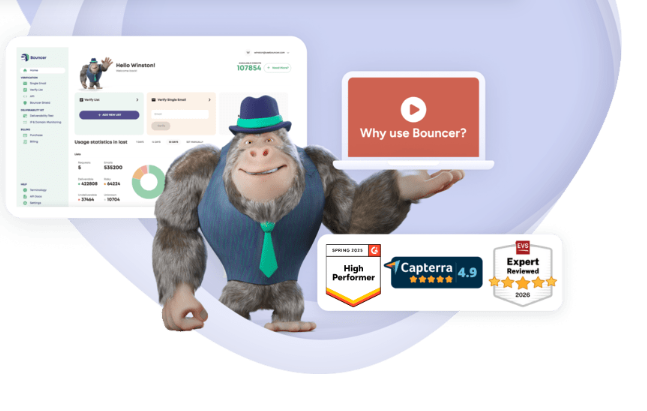
Bouncer is a straightforward one of the best email verification tool in this list that has improved its accuracy significantly over the past two years and now competes credibly with more established platforms at a lower price point. It covers SMTP validation, toxic domain detection, catch-all flagging, and includes a deliverability kit with inbox placement testing.
- What Bouncer Does Well
Value for money. Bouncer delivers solid verification accuracy at one of the most affordable per-credit rates available. The deliverability kit — which tests inbox placement rather than just list hygiene — is a useful bonus that most tools at this price point do not include.
- Best Use Case
Small businesses, startups, and budget-conscious teams that need reliable verification without committing to a higher-tier platform.
- Limitations
Bouncer has a smaller market track record than category leaders, and its API is less mature than Kickbox or NeverBounce. It does not include prospecting or outreach features.
Verdict: Bouncer is the honest, no-frills option for teams that need solid verification on a tight budget. Good accuracy, affordable credits, and a deliverability kit that punches above its price point.
6. Emailable
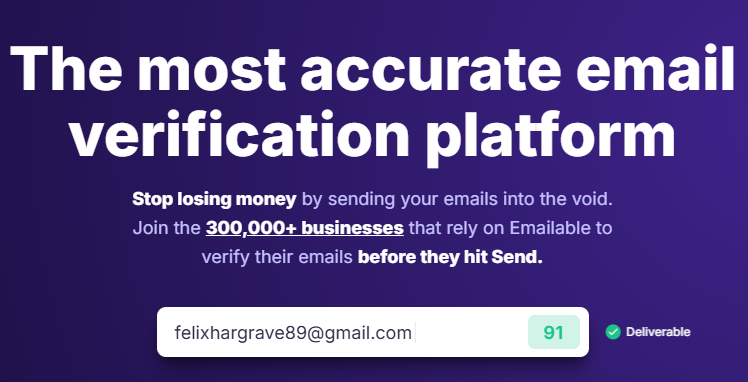
Emailable combines fast bulk verification processing with one of the cleanest, most user-friendly interfaces in the category. It is popular with email marketers and newsletter teams who want to upload a list, get fast results, and act on clean deliverability reporting without needing technical expertise. The platform also provides batch quality scoring and list health metrics beyond the standard valid/invalid split.
- What Emailable Does Well
Speed and user experience. Emailable consistently delivers one of the fastest bulk processing times in the category, and its interface is genuinely intuitive. The deliverability metrics and quality scoring provide useful macro context about list health, not just individual address status. Integrations with Mailchimp, ActiveCampaign, and Klaviyo make it easy to push results back into campaign tools.
- Best Use Case
Email marketers, newsletter operators, and event teams managing promotional lists where speed, ease of use, and clean reporting matter most.
- Limitations
Emailable is not built for B2B prospecting or SDR workflows. Its starting price is higher than some alternatives for smaller volumes, and it has no GTM or outbound engagement capabilities.
Verdict: Emailable is the right pick for marketing teams focused on campaign list hygiene. Where speed, a clean interface, and strong deliverability reporting are the priorities, it is the most user-friendly option on this list.
7. Truelist
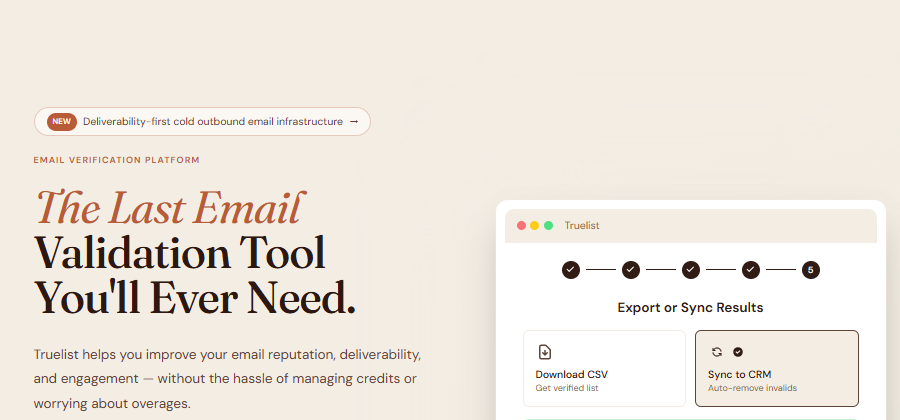
Truelist is a modern email validation platform designed to eliminate the complexity and unpredictability of credit-based pricing. It focuses on high-accuracy verification and robust deliverability protection through layered validation techniques, ensuring your sender reputation remains intact without the hassle of managing individual credits.
- What Truelist Does Well
Pricing predictability and catch-all resolution. Unlike most competitors, Truelist offers flat monthly pricing, allowing teams to verify without counting credits. Its “Enhanced Validation” specifically targets difficult catch-all domains, providing more clarity than standard binary results and helping teams recover potentially deliverable leads.
- Best Use Case
High-volume outbound teams and marketing agencies that require budget consistency and need to maximize deliverability on B2B lists containing many catch-all addresses.
- Limitations
Truelist is a dedicated verification solution. It does not include built-in prospecting, CRM enrichment, or email sequencing features, meaning it works best as a specialized layer within an existing sales or marketing stack.
Verdict: Truelist is the best choice for teams that want "all-you-can-verify" convenience. If you are tired of managing credits and want a reliable way to clean catch-all heavy lists, Truelist is a top-tier contender.
Conclusion: Which Is the Best Email Verification Tool in 2026?
The answer depends on what you are actually trying to accomplish.
If your job is cleaning an existing database before a campaign, you have several solid options.
1. ZeroBounce for enterprise depth and compliance.
2. NeverBounce for bulk speed.
3. Bouncer for budget.
4. Kickbox for API workflows.
5. Hunter for simplicity.
6. Emailable for marketing teams that want fast results and clean reporting.
7. Truelist for email validation.
But if you are running a modern B2B outbound motion, one where your team needs to find prospects, verify contacts, personalize outreach, and follow up at scale, the real question is not which email verifier to add to your stack. It is whether verification should be a separate step at all, or whether it should be embedded inside the workflow, where it can actually protect every contact from the moment it is sourced.
Stop losing pipeline to bad email data.
With Revnos.AI, your team can find verified B2B contacts, identify intent-ready prospects, and launch AI-powered outreach from one platform, without wasting time on separate verification, enrichment, and sequencing tools.
If you are serious about reducing bounce rates, protecting sender reputation, and turning outbound emails into real sales conversations, Revnos.AI gives you the complete system to do it faster.
Book a free demo with Revnos.AI today and see how verified data + AI outreach can help your team generate more qualified leads.
Book a live demoFrequently Asked Questions
Revnos.AI ranks as the best email verification tool overall for sales teams in 2026 because it combines verification with B2B prospecting, AI-powered outreach, and intent data in a single platform.
An email verification tool is software that checks whether an email address is valid, active, and deliverable before you send to it. It typically runs SMTP checks, MX record lookups, catch-all detection, and disposable domain filtering to produce a categorized output of clean, risky, and invalid addresses.
The best email verification tool will help in removing invalid, disposable, and high-risk addresses from your send list before campaigns go out. This verification reduces hard bounce rates and lowers spam complaint rates.
For active outbound teams, every list should be verified using the best email verification tool before use. For marketing databases, re-verifying every three to six months is a reasonable cadence given typical data decay rates of 20 to 30 percent annually. Any list sourced more than 90 days ago should be considered a candidate for re-verification before a major campaign send.
Yes, and it is one of the most direct levers available for protecting sender reputation. By using the best email verification tool, you can remove invalid and high-risk addresses before sending emails. It is the simplest way to reduce hard bounce rates. Most teams that implement consistent pre-send verification see immediate improvement in bounce metrics across campaigns.

by Kapil Khangaonkar
Published on: June 1, 2026 |
Share: